

What Clean Energy Spending Must Deliver
Summary
A national clean energy target is not an investment instruction. Check delivery, contracts, grid access and your own bill before acting. A reported 220 billion dollar clean energy funding need sounds like a single investment theme. It is not. India needs generation, transmission, storage, contracts, land, equipment and operating capability to turn capacity targets into reliable power. A household or investor should therefore evaluate the delivery chain rather than treating a national figure as a stock tip or a promise of lower bills.
Published on
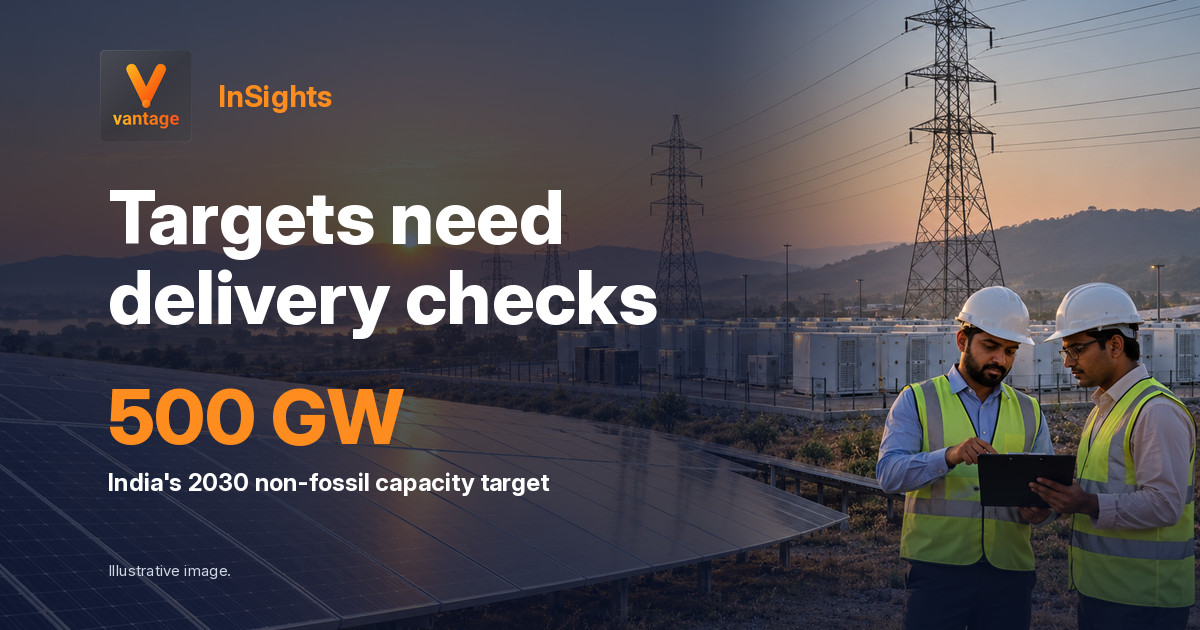
Indian clean-energy investment scene linking solar generation with transmission infrastructure
Credit: Illustrative image
Inline Intelligence
A reported 220 billion dollar clean-energy funding need sounds like a single investment theme. It is not. India needs generation, transmission, storage, contracts, land, equipment and operating capability to turn capacity targets into reliable power. A household or investor should therefore evaluate the delivery chain rather than treating a national figure as a stock tip or a promise of lower bills.
What the Headline Measures
Reuters reported on 28 October that India needs about 220 billion dollars over the next three years for clean energy and grid infrastructure to pursue its 500 GW non-fossil capacity target by 2030 -> Reuters report. The Central Electricity Authority transmission plan shows why wires and system planning are part of the same question.
The figure does not establish that each rupee will be financed, each project will achieve commissioning, or each listed participant will earn attractive returns. It also does not set a retail electricity tariff. In a power system, generation without evacuation can be curtailed, while transmission without ready generation can be underused. Storage can improve flexibility, but its economics depend on utilisation, dispatch rules, financing and contracts.
The Reader Decision Path
For a homeowner considering rooftop solar, a grid-scale investment programme may improve the long-term backdrop but does not replace site-specific due diligence. Roof condition, shade, consumption profile, local approval, quote terms and net-metering treatment are more immediate. For an investor, the relevant documents are the issuer's debt, contract profile, capacity under construction, operating performance and valuation. A broad policy target is only the first layer.
What Households and Investors Can Do Now
- Verify the policy source: Read the CEA plan and relevant MNRE or state-discom notice. Check whether a claim refers to capacity announced, tendered, awarded, under construction or commissioned.
- Request a rooftop proposal: Ask an installer for annual generation assumptions, system size, degradation assumption, warranty, maintenance scope and all taxes. Compare at least two like-for-like quotes.
- Check electricity data: Download twelve months of bills and calculate annual units consumed and average bill. Confirm local net-metering eligibility with the discom before paying an advance.
- Read investment disclosures: For a company, fund, REIT or InvIT, use the exchange filing or offer document to check leverage, project-stage exposure, revenue contract terms and risk factors.
- Track delivery: Monitor tender awards, financial close, transmission completion and commissioned capacity from official sources. These milestones can change the analysis more than a target announcement.
If your roof is shaded, structurally unsuitable or likely to be redeveloped soon, then consider deferring a rooftop system until the physical constraints are resolved. If your bills are high, the roof is suitable and local rules are confirmed, then consider comparing payback using conservative generation assumptions and a cash reserve that is separate from the installation budget. If you are considering an investment because of the 220 billion dollar figure alone, then consider waiting until you can explain the actual asset, its cash flows and its risks.
Worked example
Assume annual electricity use of 6,000 units and a proposed system expected to generate 4,800 units in its first year. If the conservative value of each offset unit is Rs 6, estimated first-year bill value is Rs 28,800. If the installed price is Rs 1,80,000 before any verified subsidy, a simple first-year value divided by cost is 16 percent. This is not an investment return or a payback promise. It ignores degradation, maintenance, export compensation, financing cost, outages and changes in tariffs. It demonstrates why the bill, quote and local rules must be checked together.
Monitor three signals: official transmission awards and commissioning notices, state net-metering rule changes, and a project's actual operating data or issuer filings.
FAQ
Does the 220 billion dollar figure mean clean-energy investments will all benefit?
No. It is an aggregate need, not a forecast for every business or asset.
Will this lower my electricity bill?
Not automatically. Your bill depends on tariff rules, consumption, system performance and any applicable rooftop-solar arrangement.
Is capacity the same as reliable supply?
No. Reliable supply also needs transmission, balancing, storage and operating performance.
Is rooftop solar suitable for every home?
No. Roof condition, shade, approvals and consumption patterns matter.
What should I check before investing?
Read the relevant disclosure, debt terms, contracts, project stage and valuation, then assess fit with your own risk tolerance and horizon.
Sources
Click an article title to view the source.
- India seeks 220 billion dollar clean-energy push to meet 2030 target published on 28 October 2026 in Reuters
- Transmission System for Integration of over 500 GW Non-fossil Capacity by 2030 on the Central Electricity Authority website, accessed on 30 October 2026
Evidence Caveats
The worked example uses stated assumptions for explanation and omits several costs and variables. It does not estimate a household's actual savings or recommend any security, installer or project.
What delivery milestone would make you trust a clean-energy project more: commissioning, a long-term contract or verified production? Share your view in the attached forum discussion.
Disclaimer
This editorial analysis is for general information and education. It is not investment, tax, legal, engineering or electricity-tariff advice. Seek advice suited to your circumstances before acting.

From TatvaOps
Solar & Energy Solutions
Considering rooftop solar?
Verified installers, subsidy support, and milestone-secured payments.
Free quotes · Verified contractors · tatvaops.com
Discuss this article
Join the conversation
Continue this discussion on Forums. A board named like this InSights article is filed under InSights.
More from Solar
Rooftop Solar Costs Rise: Is It Still Worth Installing?
Rising prices of DCR-compliant solar modules could extend rooftop solar payback periods in India. Explore government subsidies, installation economics and what homeowners should calculate before investing.
Silver Price Crash: Should You Buy After a 53 Fall?
Silver prices have fallen sharply from January 2026 peaks, with MCX futures below ₹2 lakh per kg. Is silver a buying opportunity or a risk? Explore silver ETFs, industrial demand, interest rates and what Indian investors should check.
Battery Storage: What Matters Beyond Factory Capacity?
India has a larger battery manufacturing base. That does not settle your backup requirements, installed cost or warranty. Here is what a property owner should ask before choosing a storage system.
Inline Intelligence
Key Insight Actions
Connected knowledge for Investment Guides
Move between tutorials, discussions, Studio, and hubs without losing context.
Related discussions
DCR Solar Module Premium Raises Rooftop Costs in India
1 replies
Related discussionRooftop Solar Costs Rise: Is It Still Worth Installing?
0 replies
Related discussionSilver Price Crash: Should You Buy After a 53 Fall?
1 replies
Related discussionBihar Rooftop Solar: What Is Surplus Power Worth?
1 replies
Related discussion
Topic hubs
Conclusion Intelligence
Related Discussions
DCR Solar Module Premium Raises Rooftop Costs in India
Popular in radar discussions1 reply
Rooftop Solar Costs Rise: Is It Still Worth Installing?
Popular in insights discussions0 replies
Silver Price Crash: Should You Buy After a 53 Fall?
Popular in insights discussions1 reply
Bihar Rooftop Solar: What Is Surplus Power Worth?
Popular in insights discussions1 reply
Was this helpful?
Let us know what you think