

PM Surya Ghar Crosses 39 Lakh Rooftop Solar Installations Nationwide

Devesh S. is an industry researcher and writer who specializes in translating complex industries into clear, trustworthy, and actionable knowledge. His work…
Summary
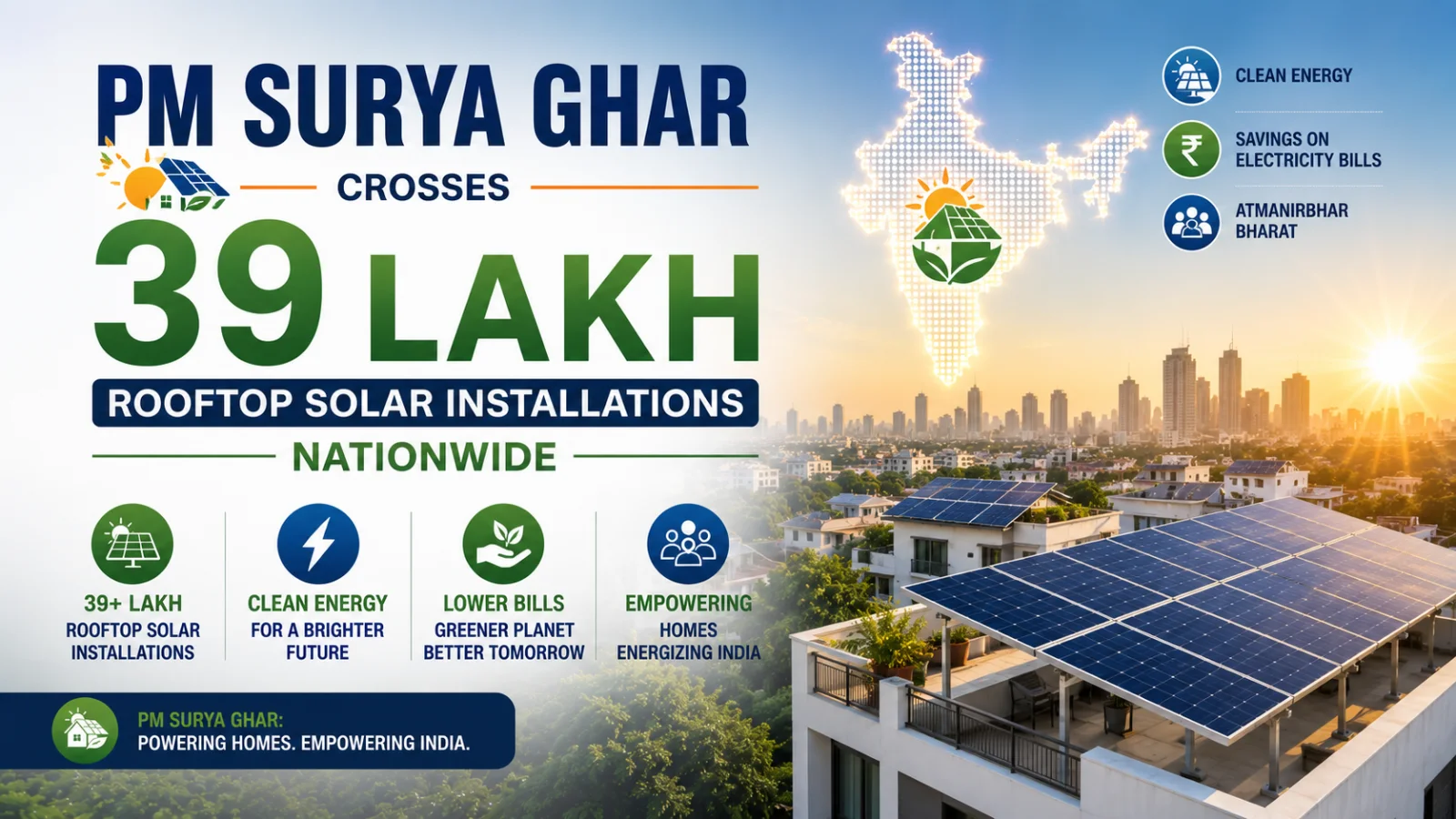
India's flagship residential solar initiative, PM Surya Ghar: Muft Bijli Yojana, has crossed 39.38 lakh rooftop solar installations, with total installed capacity reaching 14.07 GW, according to the latest programme update. Launched in February 2024, the scheme aims to install rooftop solar systems on one crore households by March 2027, helping residential consumers generate electricity while reducing their dependence on conventional grid power. The latest figures indicate continued growth in rooftop solar adoption under the programme.
Published on
Inline Intelligence
India's flagship residential solar initiative, PM Surya Ghar: Muft Bijli Yojana, has crossed 39.38 lakh rooftop solar installations, with total installed capacity reaching 14.07 GW, according to the latest programme update.
Launched in February 2024, the scheme aims to install rooftop solar systems on one crore households by March 2027, helping residential consumers generate electricity while reducing their dependence on conventional grid power.
The latest figures indicate continued growth in rooftop solar adoption under the programme. According to the Ministry of New and Renewable Energy (MNRE), the scheme has expanded steadily since its launch through central financial assistance for eligible residential consumers.
The installed capacity of 14.07 GW represents the combined electricity generation capacity of rooftop solar systems installed under the programme across the country.
The government is also examining a possible next phase of PM Surya Ghar that could introduce battery energy storage, shared rooftop solar systems for apartment residents and improved grid integration. These proposals remain under discussion, and no formal policy has been announced.
PM Surya Ghar forms part of India's broader strategy to increase non-fossil fuel electricity generation and expand access to clean energy at the household level. Rooftop solar is expected to complement large utility-scale renewable energy projects by enabling consumers to generate electricity closer to where it is used.
The latest milestone brings the programme closer to its target of installing rooftop solar systems in one crore households by 2027, making it one of India's largest residential clean energy initiatives.
Sources

From TatvaOps
Solar, Energy & Automation Solutions
Considering rooftop solar?
Verified installers, subsidy support, and milestone-secured payments.
Free quotes · Verified contractors · tatvaops.com
Discuss this article
Join the conversation
Continue this discussion on Forums. A board named like this Radar article is filed under Radar.
More from Solar
MNRE Extends ALMM to Solar Ingots and Wafers From June 1, 2028
The Ministry of New and Renewable Energy has extended India's Approved List of Models and Manufacturers framework further upstream in the photovoltaic supply chain, introducing ALMM List III for solar wafers and ingots . The new requirements are scheduled to take effect on June 1, 2028 . From that…
Gujarat Floats Tender for 4.153 MW of Solar Projects
Gujarat Floats Tender for 4.153 MW of Solar Projects Gujarat has floated a tender for solar projects with a combined capacity of 4.153 MW , according to the project information identified by Vantage’s Wire Desk. The tender is for grid connected solar projects and represents another addition to…
Solar Industries to Acquire Omnia for 12,951 Crore in 1.36 Billion Deal
September 15, 2026: Solar Industries India has agreed to acquire South Africa's Omnia Holdings in an all cash transaction valued at approximately $1.355 billion, or ₹12,951 crore , marking the Indian explosives manufacturer's largest overseas expansion to date. The transaction will be executed…
Inline Intelligence
Key Insight Actions
Connected knowledge for Renewable Energy
Move between tutorials, discussions, Studio, and hubs without losing context.
Conclusion Intelligence
Was this helpful?
Let us know what you think