

Climate Risk: What to Check Before Buying a Home
Summary
A national climate report cannot tell you whether one home will flood. Learn how to check local exposure, building weaknesses, service disruption and financial protection before buying or upgrading property. Two homes can share a postcode and face different consequences during heavy rain. One may remain accessible while the other loses its approach road, basement services or electricity. That is the practical question behind India’s latest climate assessment: what would a weather event interrupt at the property you are considering, and what evidence helps you judge that exposure?
Published on
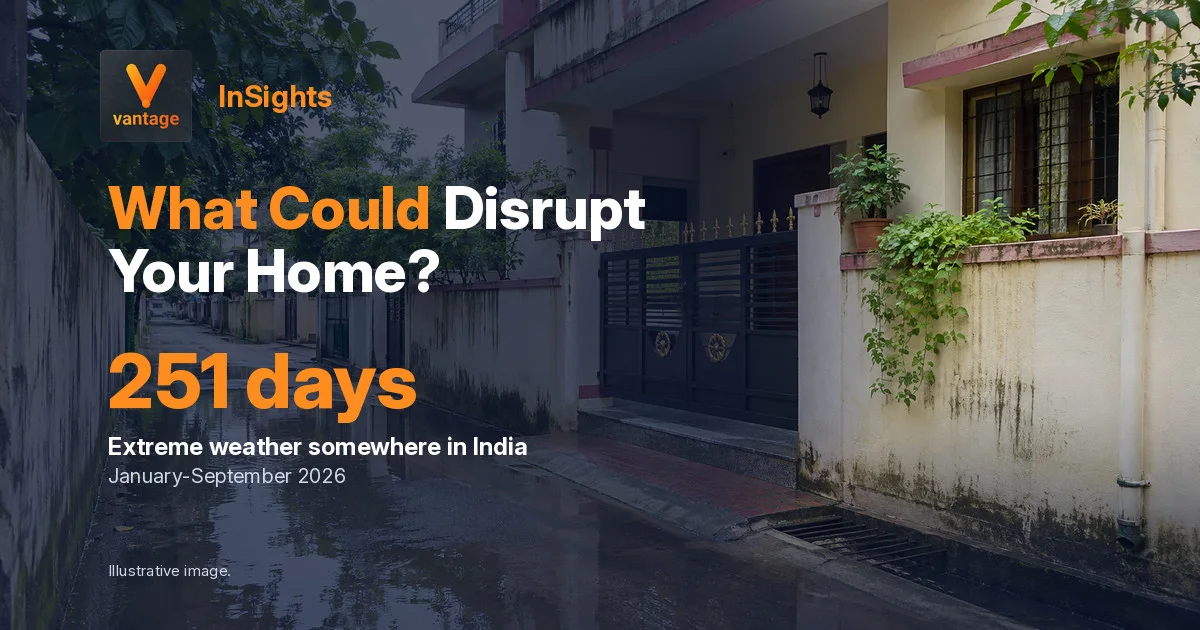
“What Could Disrupt Your Home?” highlights drainage, access and building resilience checks before buying or upgrading property.
Inline Intelligence
Two homes can share a postcode and face different consequences during heavy rain. One may remain accessible while the other loses its approach road, basement services or electricity.
That is the practical question behind India’s latest climate assessment: what would a weather event interrupt at the property you are considering, and what evidence helps you judge that exposure?
Down To Earth reports extreme weather somewhere in India on 251 days during January–September 2026 -> India Climate 2026: Five years of daily disasters leave over 16,000 dead from extreme weather.
The figure warrants attention. It cannot tell you whether one house will flood or how much a repair would cost.
Start with the location, then inspect the building
A useful assessment separates three questions:
- Hazard: What weather events are relevant to this locality?
- Exposure: Which parts of the property and its access routes could encounter them?
- Vulnerability: What could fail, and how difficult would recovery be?
The Ministry of Earth Sciences points to IMD’s hazard and vulnerability atlas as a planning resource -> Parliament Question: Changes in Weather Cycle Due to Climate Change.
Regional mapping can guide further enquiries. It cannot replace a site inspection or establish the adequacy of a building’s drainage and construction.
For a Bengaluru property, for example, the useful next step is evidence about that site and its surroundings. A national headline alone cannot establish whether a particular layout is flood-prone.
What would stop the home from functioning?
Looking only for water inside a flat can miss other costs.
Ask what would happen if the approach road became unusable, common electrical equipment failed or water supply was interrupted. For an apartment, request information about the location and protection of essential shared equipment.
For an independent house, an appropriately qualified professional can examine relevant weaknesses and distinguish maintenance needs from changes requiring design or structural advice.
These are questions for investigation, not findings about every building.
Turn assurances into records
“Water has never entered here” is a starting point for a conversation. Ask what period that statement covers and whether it includes the road, parking, basement and common areas.
Useful evidence may include dated photographs, association meeting records, repair invoices and documented complaints. Speak to existing residents and compare their accounts with available official information.
A dry-weather visit provides limited evidence about wet-season performance. Equally, one incident does not by itself establish the future frequency or severity of flooding.
Who would carry the financial loss?
A property can require temporary accommodation or replacement of belongings alongside repairs. The household needs to understand which expenses it could fund and which may fall within applicable insurance.
Vantage previously examined the distinction between building cover, contents and other potential losses -> Cyclone Arnab: Who Pays When Coastal Homes Flood?.
Use your own policy schedule and wording to confirm protection. For an apartment, establish what the association insures and what remains your responsibility. Do not assume a policy guarantees payment for every consequence of an event.
What to check next
- Before shortlisting: Review relevant local hazard information and available incident records.
- Before paying: Request documented answers about past disruption, essential services and completed remedial work.
- Before upgrading: Obtain a qualified assessment of the actual weakness before choosing a solution.
- Before relying on insurance: Confirm the insured property, covered events, limits, exclusions and claim requirements.
The aim is to make uncertainty visible before it becomes a purchase commitment. If evidence is missing, record the unanswered question rather than treating an assurance as proof.
FAQ
Does the national event count predict damage to my home?
No. It records weather occurrence across India, not an individual property’s loss probability.
Is a higher-floor apartment free from flood-related disruption?
That cannot be assumed. Check access and shared services as well as the dwelling itself.
Does a hazard map replace a property inspection?
No. It helps identify questions that need local and building-specific investigation.
Does one flood incident make a property unsuitable?
The incident needs context, including its cause, severity, subsequent work and remaining exposure. This article cannot determine suitability.
Should I renovate immediately after reading the report?
The national findings do not establish that your home needs work. Identify an actual issue and obtain appropriate professional advice before spending.
Sources
Click an article title to view the source.
- India Climate 2026: Five years of daily disasters leave over 16,000 dead from extreme weather published on 4 November 2026 in Down To Earth.
- Parliament Question: Changes in Weather Cycle Due to Climate Change published on 19 March 2026 by the Press Information Bureau, Ministry of Earth Sciences.
- Cyclone Arnab: Who Pays When Coastal Homes Flood? published on 28 October 2026 in Vantage InSights.
Evidence Caveats
The event count is attributed to Down To Earth’s account of the assessment. The full downloadable report was not independently inspected. The reporting covers January–September, not the completed calendar year. It does not establish a particular property’s safety, future damage, insurance premium or resale value. The property checks above are general analytical guidance, not findings from a site survey.
What evidence would make you comfortable buying a home in a locality with a history of weather-related disruption? Share the checks you would prioritise, relevant experience or counter-evidence in the attached forum discussion.
Disclaimer
This article provides general editorial information, not personalised engineering, insurance, legal or investment advice. Obtain qualified assessments for property-specific decisions and follow current official instructions during severe weather.

From TatvaOps
Home Maintenance & Appliance Care
Building or extending your home?
Run your residential build with verified contractors and daily progress tracking.
Free quotes · Verified contractors · tatvaops.com
Discuss this article
Join the conversation
Continue this discussion on Forums. A board named like this InSights article is filed under InSights.
5 replies already on Forums
More from Real Estate
Your Project Is Delayed. Can You Stop Paying the Builder?
A Haryana RERA case shows why project delay and buyer default can be separate questions. Before withholding an instalment, check the payment milestone, demand notices, construction evidence and your agreement.
Your Flat Is Delayed, but Payment Demands Keep Coming. What Should You Check?
Before you commit to a number, a delayed home can leave a buyer facing two pressures at once: the property is not ready, while instalment demands or loan repayments continue — worth a full read?
Is Your Cheque Book Still Valid? Three Things to Check Before a Payment
The RBI rejected a nationwide cheque-book replacement claim, but bank-specific instructions may still matter. Check your cheque series, the date on each cheque and your bank’s Positive Pay rules.
Inline Intelligence
Key Insight Actions
Connected knowledge for Home Buying & Climate
Move between tutorials, discussions, Studio, and hubs without losing context.
Related discussions
Topic hubs
Conclusion Intelligence
Related Discussions
Was this helpful?
Let us know what you think