

The Home Maintenance Checklist Every Homeowner Needs
Summary
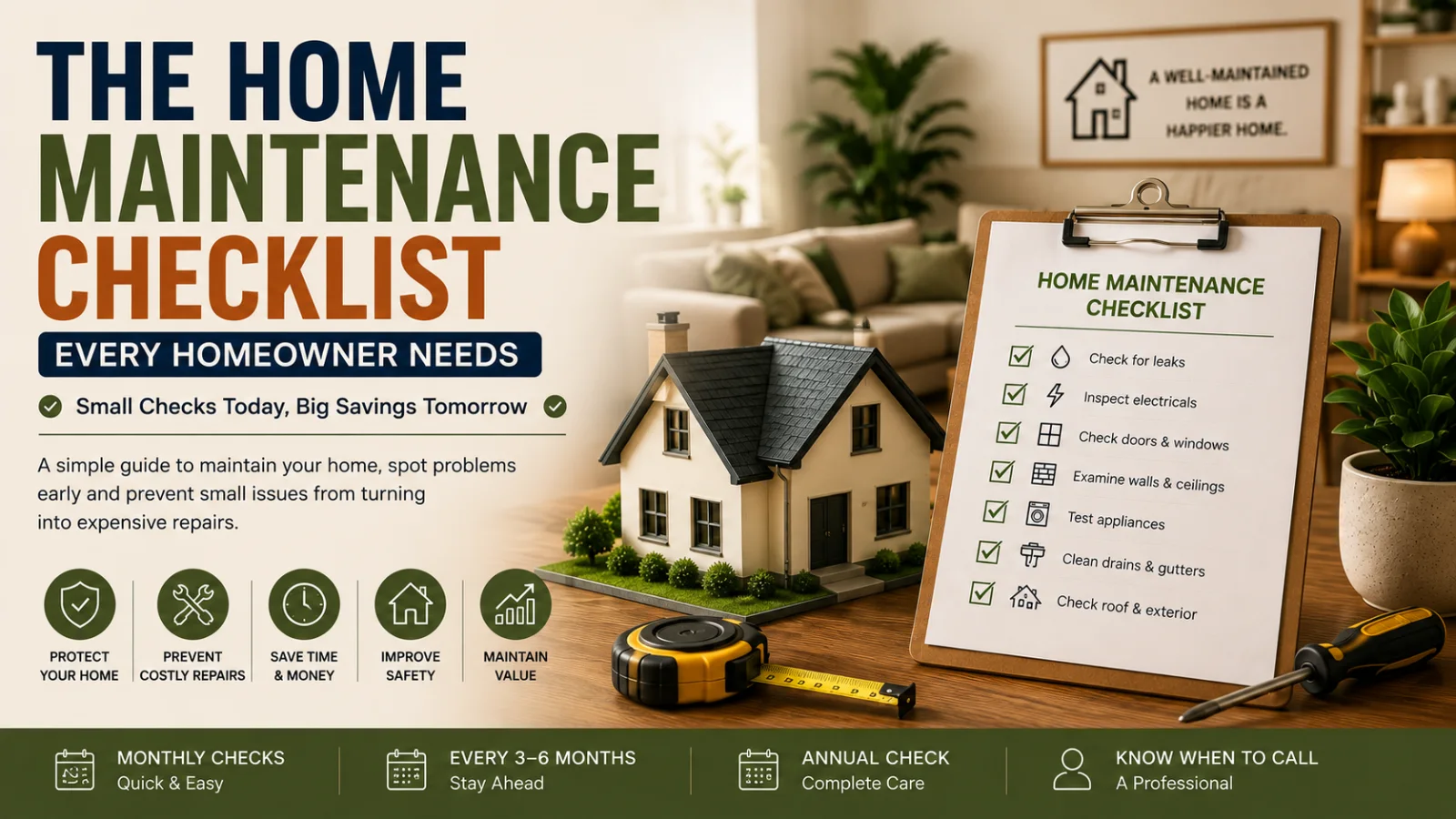
A practical guide to maintaining your home, spotting problems early and preventing small issues from turning into expensive repairs. Owning a home is exciting. Maintaining one? Slightly less glamorous. Most homeowners only start paying attention to maintenance when something stops working, starts leaking, makes a strange noise, or suddenly demands a large amount of money. Unfortunately, homes have a remarkable talent for turning small ignored problems into expensive surprises. Regular home maintenance helps you spot issues early, protect your property and avoid unnecessary repair costs.
Published on
Owning a home is exciting.
Maintaining one? Slightly less glamorous.
Most homeowners only start paying attention to maintenance when something stops working, starts leaking, makes a strange noise, or suddenly demands a large amount of money.
Unfortunately, homes have a remarkable talent for turning small ignored problems into expensive surprises.
Regular home maintenance helps you spot issues early, protect your property and avoid unnecessary repair costs.
You don't need to become a plumber, electrician and contractor all at once. You simply need to know what to check, when to check it and when to call a professional.
This guide gives you exactly that.
 Home renovation Image Aug 31, 2026, 06 19 07 PM
Your Home Needs Regular Care Too
Your home is made up of many systems working together every day.
Your plumbing carries water throughout the property. Your electrical system powers your appliances and lighting. Doors, windows, walls and fixtures experience daily wear and tear.
Over time, things naturally loosen, wear out or require attention.
Regular home maintenance helps you:
- Identify problems before they become serious
- Reduce expensive repair costs
- Improve the lifespan of appliances and fixtures
- Keep your home safe
- Protect the value of your property
- Avoid unexpected maintenance emergencies
The goal isn't to constantly search for problems.
It's simply to develop the habit of checking your home regularly.
The Monthly Checks That Take Just Minutes
You don't need to spend an entire weekend inspecting your house every month.
A few simple checks can help you identify obvious problems early.
Check for Water Leaks
Look around:
- Kitchen sinks
- Bathroom sinks
- Toilets
- Washing machine connections
- Water heaters
Watch for dripping water, damp areas or unusual moisture.
Even a small leak can cause bigger problems over time, including water damage, mould and increased water bills.
Test Lights and Electrical Switches
Check whether:
- Lights are working properly
- Switches are functioning correctly
- Plug points feel loose
- Any electrical fixture is overheating
Never ignore burning smells, sparks or repeatedly tripping circuit breakers.
Those are not your home's way of being dramatic. They need professional attention.
Look for Signs of Dampness
Inspect walls and ceilings for:
- Damp patches
- Peeling paint
- Discolouration
- Mould
- Water stains
Early detection is important because moisture problems can spread and damage finishes, furniture and parts of your property.
Every Few Months: Give Your Home a Closer Look
Some maintenance tasks don't need monthly attention but should still be checked regularly.
Every three to six months, take some time to inspect the following areas.
Doors and Windows
Check whether doors and windows:
- Open and close smoothly
- Have loose handles
- Make unusual noises
- Have damaged locks
- Show gaps around the frames
Small adjustments can prevent bigger problems later.
Kitchen and Bathroom Fixtures
Check your:
- Taps
- Shower fittings
- Sink drainage
- Cabinet hardware
- Exhaust fans
Slow drainage, dripping taps and loose fittings are easier and cheaper to fix early.
Appliances
Regularly inspect major appliances for unusual behaviour.
Pay attention to:
- Strange noises
- Reduced performance
- Water leaks
- Overheating
- Unusual smells
Following manufacturer maintenance recommendations can significantly extend the life of your appliances.
The Annual Home Health Check
At least once a year, give your property a more complete inspection.
Think of it as an annual health check for your home.
Inspect Walls and Ceilings
Look carefully for:
- Cracks
- Water stains
- Dampness
- Peeling paint
Not every crack is serious, but new or expanding cracks should be examined by the appropriate professional.
Check Plumbing Systems
Inspect visible pipes and fixtures for:
- Leaks
- Corrosion
- Low water pressure
- Slow drainage
Small plumbing issues can quietly cause significant damage if left unattended.
Review Your Electrical System
Make sure your electrical systems are functioning safely.
Pay attention to:
- Frequently tripping breakers
- Damaged switches
- Loose plug points
- Flickering lights
For electrical repairs or inspections involving wiring and circuits, always use a qualified professional.
The Areas of Your Home That Need the Most Attention
Some parts of a home experience more wear and tear than others.
💧 Plumbing
Water can cause significant damage when leaks go unnoticed.
Regularly inspect areas around:
- Bathrooms
- Kitchens
- Washing machines
- Water heaters
⚡ Electrical Systems
Electrical systems should always be treated seriously.
Never attempt repairs beyond your knowledge or experience.
When in doubt, call a qualified electrician.
🚪 Doors and Windows
These are used constantly and often develop:
- Loose hinges
- Damaged locks
- Alignment problems
- Handle issues
Regular checks can keep them functioning smoothly.
🏠 Walls and Ceilings
Pay attention to changes.
New stains, damp patches or cracks may indicate an underlying issue that needs investigation.
Warning Signs You Should Never Ignore
Some problems deserve immediate attention.
Don't delay if you notice:
- Persistent water leaks
- A burning electrical smell
- Sparks from switches or plug points
- Major cracks appearing in walls
- Severe dampness or mould growth
- Repeated electrical failures
- Sudden drops in water pressure
Ignoring warning signs rarely makes them disappear.
It usually just gives them more time to become expensive.
The Simple Rule: Small Checks Prevent Big Bills
One of the most important lessons in home maintenance is simple:
Small problems are usually easier to fix than big problems.
A dripping tap today may become water damage tomorrow.
A small damp patch may eventually damage an entire wall.
A loose electrical connection may become a serious safety concern.
Regular maintenance doesn't guarantee that problems will never happen.
But it gives you a much better chance of identifying them early.
Your Complete Home Maintenance Checklist
Use this simple checklist to stay organized.
Every Month
- Check for visible water leaks
- Look for dampness and mould
- Test lights and switches
- Check sinks and drainage
- Look for unusual appliance behaviour
Every 3–6 Months
- Inspect doors and windows
- Check taps and bathroom fixtures
- Inspect cabinet hardware
- Check exhaust fans
- Review appliance performance
Once a Year
- Inspect walls and ceilings
- Check visible plumbing systems
- Review electrical safety
- Look for cracks and water damage
- Schedule professional maintenance where required
A Well-Maintained Home Is a Smarter Home
Home maintenance doesn't need to feel complicated.
You don't need expert knowledge to notice when something looks different, sounds unusual or stops working properly.
The key is consistency.
Spend a little time checking your home regularly.
Address small issues early.
And know when a problem requires professional help.
Those simple habits can help protect your home, reduce unnecessary repair costs and give you greater peace of mind.
Take care of your home regularly, and it will take care of you for years to come.
Coming Up Next
Small Problems, Big Bills: Home Issues You Should Never Ignore
In the next article, we'll explore common household problems that may seem minor at first but can become expensive repairs when ignored.

From TatvaOps
Home Maintenance & Appliance Care
Need plumbing work done right?
Book verified plumbers with upfront quotes and milestone payments.
Free quotes · Verified contractors · tatvaops.com
Discuss this article
Join the conversation
Continue this discussion on Forums. A board named like this InSights article is filed under InSights.
More from Construction
Rupee Defence: Does Relief Change Your Money Decisions ?
RBI’s rupee defence can change currency calculations without guaranteeing a lasting recovery. We examine the different effects on overseas bills, remittances, foreign assets and imported purchases.
Your Savings Have Not Fallen. Why Does the Overseas Goal Cost More?
Your savings balance can stay unchanged while an overseas goal becomes more expensive. Explore how rupee weakness affects foreign bills, imported purchases and remittances, and why the currency of your goal matters.
India's 430 Billion Housing Pipeline Is Huge. The Bigger Question Is Whether Buyers Can Absorb It
India's residential construction pipeline reached $430 billion in 2025, but scale alone does not prove sustainable demand. The next test is whether sales, affordability and developer execution can convert that pipeline into completed, occupied homes.
Key Insight Actions
Connected knowledge for Home Maintenance
Move between tutorials, discussions, Studio, and hubs without losing context.
Conclusion Intelligence
Was this helpful?
Let us know what you think