

Builder Changing the Plan? Check Before You Consent

Summary
Your builder asks you to approve a change to your project. What should the form explain, and does every alteration need the same consent? You bought an apartment after reviewing its layout and the project’s shared spaces. Later, the developer asks you to sign a form consenting to changes. The important question is not just whether a signature is required. It is whether you understand what you are being asked to approve. UP RERA has reportedly told promoters not to rely on broad or blanket consent without explaining the proposed modifications.
Published on
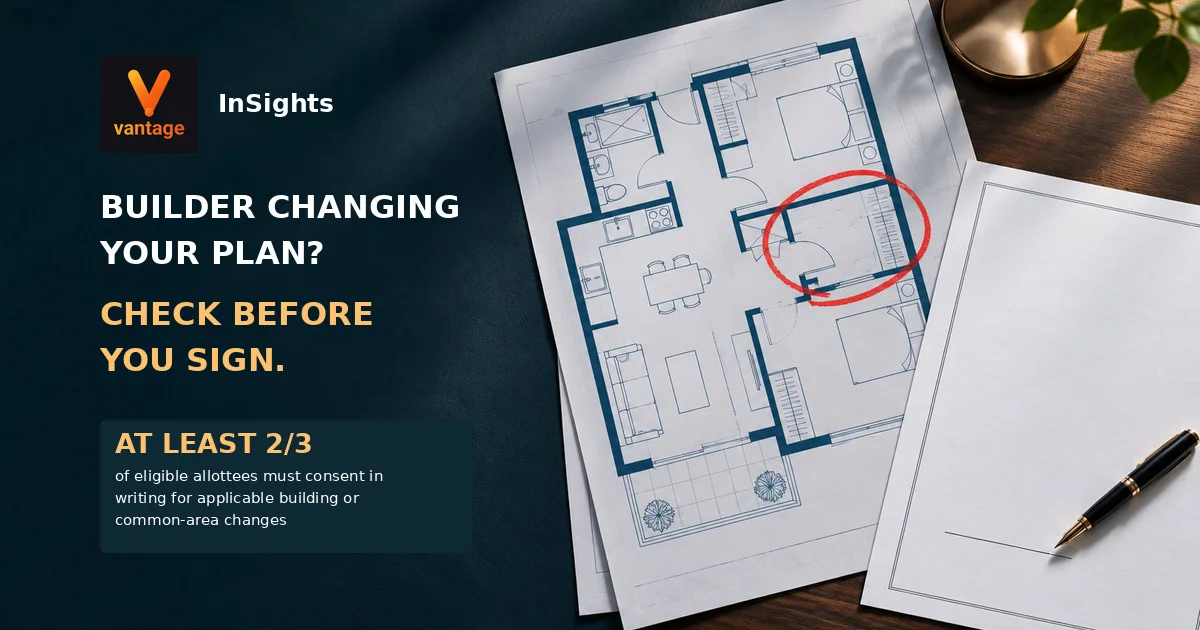
The cover highlights a homebuyer’s decision when a developer proposes changing a project plan. It encourages readers to compare the proposed revision with their agreement and understand what they are being asked to approve.
Inline Intelligence
You bought an apartment after reviewing its layout and the project’s shared spaces. Later, the developer asks you to sign a form consenting to changes. The important question is not just whether a signature is required. It is whether you understand what you are being asked to approve.
UP-RERA has reportedly told promoters not to rely on broad or blanket consent without explaining the proposed modifications. According to the reports, buyers should be informed in writing about the impact on their unit’s carpet area and the project’s common areas and spaces.
That creates a practical starting point for an affected buyer: identify the exact proposal, compare it with the documents already provided and understand which consent requirement may apply.
Read the reported direction here -> UP-RERA bars blanket consent from homebuyers for changes in building plans.
What does “blanket consent” mean in this context?
The reports describe a concern that some promoters had obtained broad consent without explaining the specific modifications proposed. UP-RERA says such general consent, without complete details of the proposed changes, will not be accepted.
The direction does not establish that every form containing broad language is automatically invalid in every dispute. Its application to a particular form depends on the documents, circumstances and applicable law.
The Times of India reports that the regulator has prescribed a standard consent format and called for dated consent documents and allottee details to be submitted for verification -> UP RERA bars builders from taking blanket consent for changes in building plans.
Does every change need the same consent?
No. Section 14 of the RERA Act distinguishes between different kinds of changes after the approved plans and specifications have been disclosed.
For additions or alterations concerning the apartment, plot or building agreed to be taken by a person, Section 14(2)(i) refers to that person’s previous consent. It also sets out limited circumstances for certain minor alterations, including conditions relating to architectural or structural reasons.
For certain other alterations or additions to the sanctioned plans, specifications of buildings or common areas, Section 14(2)(ii) refers to previous written consent from at least two-thirds of the specified allottees, excluding the promoter.
The detailed wording matters. Do not assume that a two-thirds vote answers every question about a change to an individual unit, or that every alteration automatically falls into the same category.
Read the statutory wording here -> The Real Estate (Regulation and Development) Act, 2016.
What should you compare before responding?
Start with the documents that relate to your own registered project, phase and unit. A promoter may have several developments or phases, and a general project name may not identify the precise plan being changed.
Ask for the proposed changes in writing and compare them with the relevant documents available to you:
- Your unit: Does the proposal identify any change to the apartment’s layout, carpet area, fixtures or agreed specifications?
- Shared spaces: Does it describe changes to common areas, facilities, access or other spaces?
- Additions and deletions: What is being added, removed or rearranged?
- The plan versions: Can you identify the previously sanctioned plan and the proposed revision, with dates and the relevant project or phase?
- The consent form: Does it identify the specific proposal you are being asked to approve?
These are practical checks, not a claim that every document will necessarily be supplied in the same way in every case. If a drawing or term is unclear, ask for an explanation in writing and retain the response.
What if the developer says most buyers have agreed?
Ask which alteration is proposed, which consent provision is being relied on and how the relevant allottees have been identified. The answer may depend on the building, the nature of the change and the applicable statutory wording.
Section 14 contains an explanation about how certain multiple bookings are counted for the two-thirds provision. An individual’s rights and the collective-consent requirement should not be collapsed into a simple count of apartments.
If you disagree with a proposal or believe a change has already been made without the required process, keep the relevant records and obtain advice on the options available in your specific case. Do not assume that declining or signing a form automatically resolves the dispute.
What should you do next?
- Identify the proposal: Ask for a written description of the changes and the project, building or phase to which they relate.
- Compare the records: Review the relevant sanctioned plan, your agreement and specifications alongside the proposed revision.
- Clarify the consequences: Ask how the change would affect your unit, shared spaces, access or other features relevant to you.
- Get case-specific advice: If the proposal is unclear or disputed, consult a qualified property lawyer before signing or taking action.
Vantage has previously explained UP-RERA’s broader consolidation of promoter and agent regulations -> UP-RERA consolidates rules for builders and agents: 7 changes homebuyers should know. The newly reported consent direction addresses a more specific question about proposed plan changes.
FAQ
1. Can a developer ask buyers to approve a plan change?
A developer may seek consent for a proposed change, but the applicable process depends on the alteration and relevant law. UP-RERA’s reported direction requires the proposed modifications to be explained rather than relying on uninformed blanket consent.
2. Does every change require two-thirds consent?
No. Section 14 distinguishes between changes concerning an individual’s agreed unit and certain other changes to buildings or common areas. The correct provision depends on the facts.
3. Are minor changes treated differently?
Section 14 describes limited circumstances for certain minor alterations and sets conditions for them. The Act also explains that specified structural changes are excluded from that description.
4. Does UP-RERA’s reported direction apply across India?
The reported direction is from Uttar Pradesh’s regulator. Section 14 is part of the central RERA Act, while its application in a particular matter and any state-specific procedures require separate consideration.
5. What should I ask for before signing?
Ask for the specific proposed changes in writing, the relevant plan versions and an explanation of the effect on your unit and shared spaces. Review the consent form alongside your agreement.
6. What if I have already signed a consent form?
The effect depends on what the document says, the information provided, the proposed change and applicable law. Keep a copy and seek advice based on your circumstances rather than assuming it is automatically valid or invalid.
7. Can I stop making payments because I disagree with a change?
Do not assume a disagreement automatically changes your payment obligations. Review your agreement and the relevant notices with a qualified adviser before altering payments or taking other action.
Sources
Click an article title to view the source.
- UP-RERA bars blanket consent from homebuyers for changes in building plans, published on 13 November 2026 in ETRealty.
- UP RERA bars builders from taking blanket consent for changes in building plans, published on 13 November 2026 in The Times of India.
- The Real Estate (Regulation and Development) Act, 2016, published in 2016 and hosted by India Code.
- UP-RERA consolidates rules for builders and agents: 7 changes homebuyers should know, published on 19 August 2026 in Vantage Radar.
Evidence Caveats
The November UP-RERA direction and standard-format details are described through the cited news reports. The specific direction and prescribed form were not independently reviewed. Section 14 of the RERA Act was reviewed separately. No individual project plan, buyer agreement, consent form or dispute was examined for this article.
If your developer proposed changing a project plan, what information would you need before making a decision? Share your questions or experience in the attached forum discussion without posting personal documents or contact details.
Disclaimer
This article is for general information and is not legal or financial advice. The applicable consent process and available remedies depend on the proposed change, documents, facts and law. Consult a qualified professional about your circumstances before signing or taking action.

From TatvaOps
Residential Construction
Building or extending your home?
Run your residential build with verified contractors and daily progress tracking.
Free quotes · Verified contractors · tatvaops.com
Discuss this article
Join the conversation
Continue this discussion on Forums. A board named like this InSights article is filed under InSights.
3 replies already on Forums
More from Real Estate
Bharat Future City Plot Checks Before Paying a Premium
How to check a Bharat Future City plot's planning record, road access and utilities before assigning value to proposed infrastructure.
Telangana House Pattas and What Families Should Check
How Telangana families can trace old house pattas, reconcile loan and allotment records and check collection instructions with their district office.
Amrapali Assets Could Be Auctioned. Will That Bring Your Home Closer?
Amrapali asset sales could help recover funds, but will that bring a waiting buyer closer to possession? Here are the steps between a proposed auction, project funding and a completed home.
Inline Intelligence
Key Insight Actions
Connected knowledge for Legal Guidance
Move between tutorials, discussions, Studio, and hubs without losing context.
Related discussions
Topic hubs
Conclusion Intelligence
Related Discussions
Was this helpful?
Let us know what you think